
Ask a construction business where profit leaks, and experienced operators will often point to the same place: variations. Not the big, obvious variations that everyone documents — but the steady accumulation of small scope changes that get done on site and never fully make it into a claim.
This is scope creep, and it is one of the most reliable margin-killers in construction. The work is real, the cost is real, but the payment lags or never arrives — because the contract management discipline that should capture it broke down under site pressure.
How Scope Creep Erodes Margin
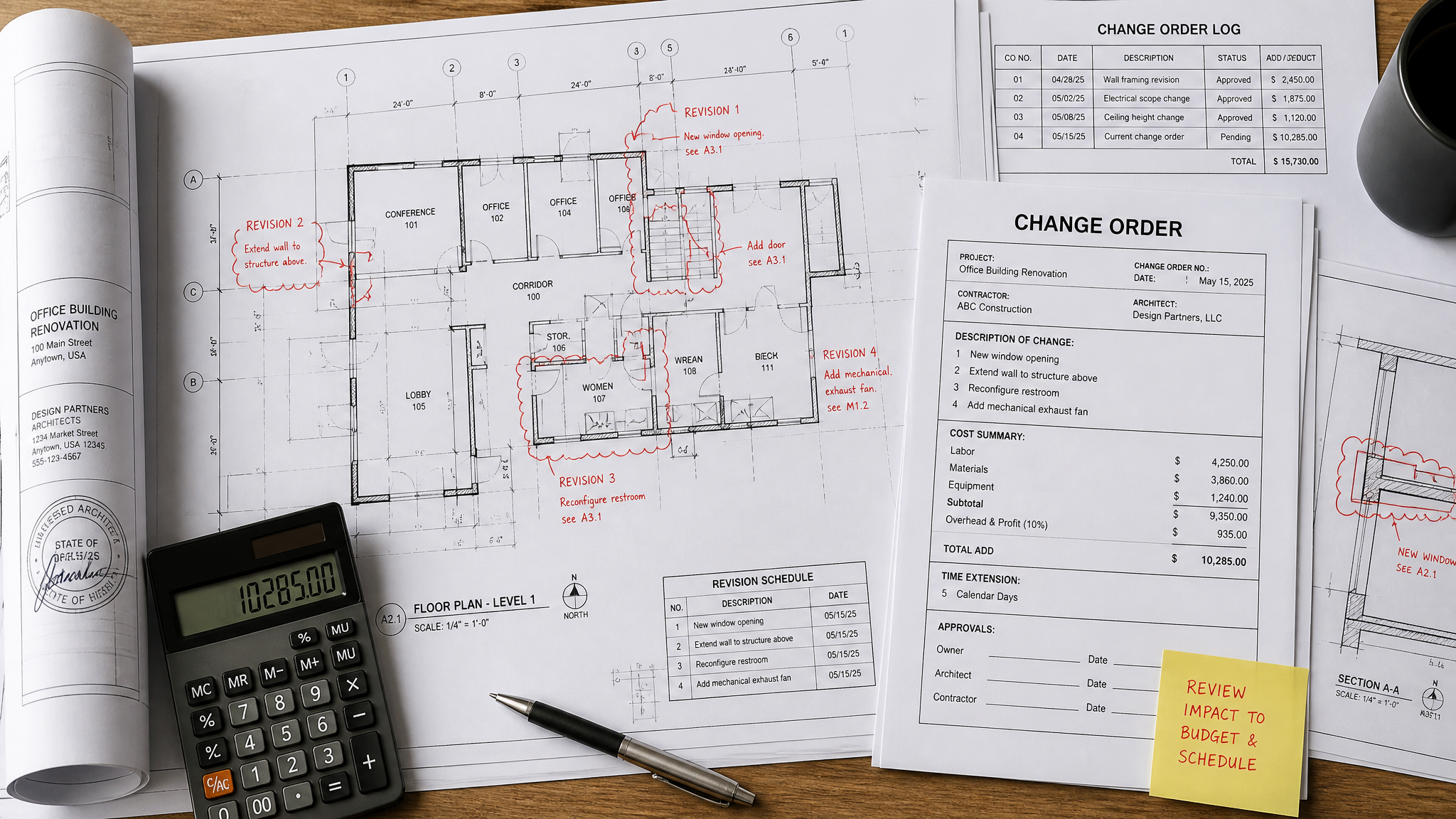
Scope creep rarely arrives as one big decision. It accumulates:
- A client asks for a small change on site, and the builder obliges to keep goodwill
- An unforeseen condition requires extra work to proceed
- A design ambiguity gets resolved in the client's favour without a formal variation
- A subcontractor does a little extra that never gets captured up the chain
Each instance feels too small to formalise in the moment. But collectively, they represent work performed without corresponding payment — and that comes straight off the margin.
Why Variations Fail to Get Captured
The failure is almost always about process, not intent:
- Timing — the work happens now, but the paperwork is "later," and later never comes
- Ambiguity — it is unclear whether a change is a variation or within the original scope
- Notice requirements — the contract requires variations to be notified in a certain way within a certain time, and those requirements are missed
- Weak records — there is no clear record of what was agreed, so claiming later becomes a dispute
- Site pressure — keeping the job moving takes priority over documentation
The contract usually contains the mechanism to protect you. The problem is that the mechanism only works if it is followed — and under pressure, it often is not.
The Discipline That Protects Margin
Teams that protect their margin against scope creep share a common discipline around variations:
None of this is complicated. But it requires knowing the contract well and having a reliable process to follow it — which is exactly what breaks down when contracts are dense and reviewed under time pressure.
Start With the Contract
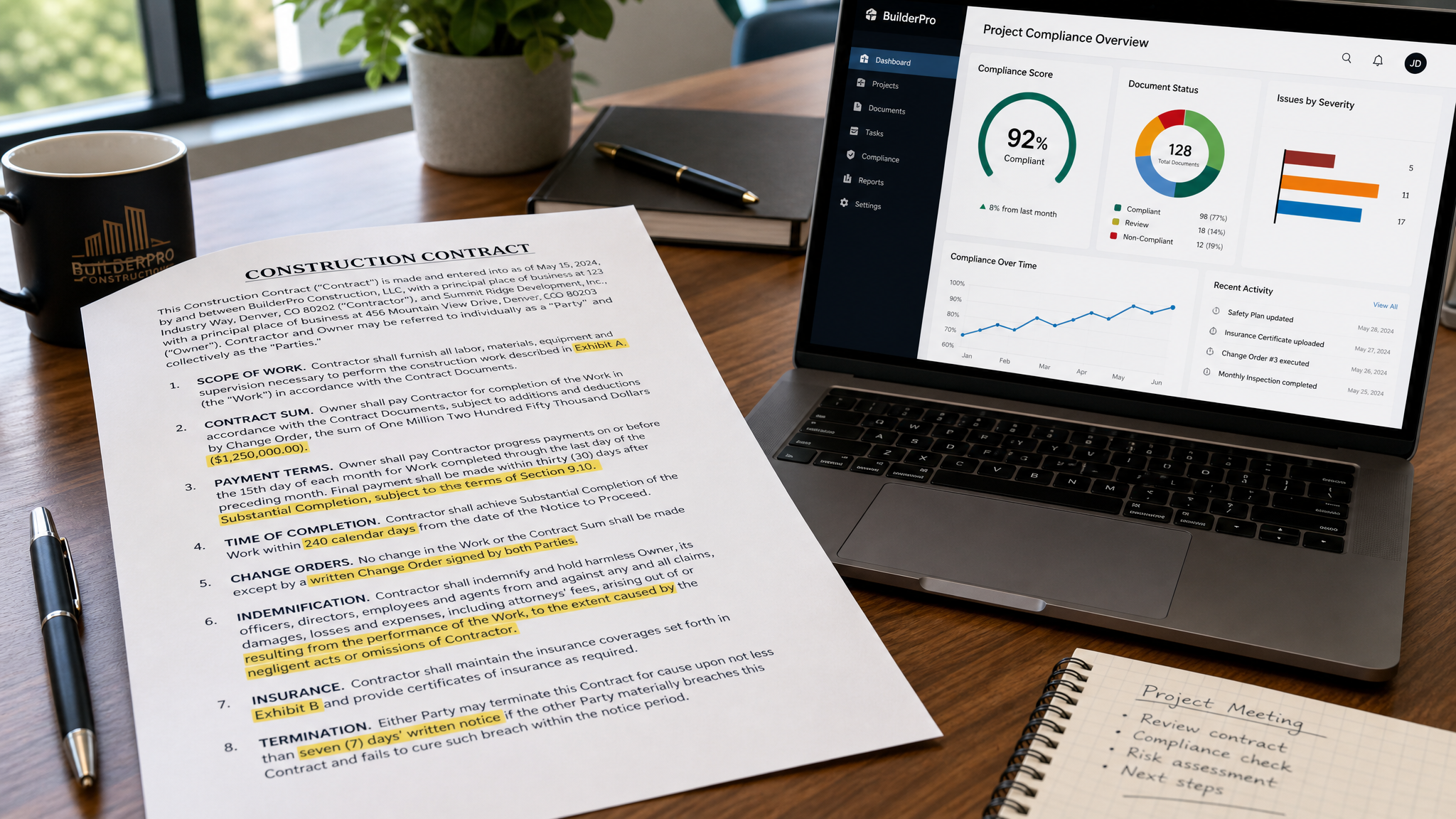
Protecting your margin against variations starts before any work begins — with understanding what the contract actually says about variations, notices, and scope. A contract with weak variation provisions, tight notice windows, or ambiguous scope definitions is a margin risk you should know about before you sign, not discover mid-project.
This is where careful contract review pays for itself many times over. Knowing your variation rights and obligations up front means you can follow the mechanism correctly when changes arise — and negotiate better terms where the contract puts your margin at risk.
Where ContractGuard Fits
ContractGuard uses AI to review construction contracts against New Zealand construction standards and the Construction Contracts Act 2002 — including the variation and notice provisions that determine whether you can protect your margin when scope changes.
ContractGuard flags:
- Variation provisions that are unclear or unfavourable
- Notice requirements with tight or easily-missed deadlines
- Scope definitions that are ambiguous enough to invite disputes
- Payment terms around variations that could delay or reduce what you are owed
By surfacing these before you sign — and explaining why each matters — ContractGuard lets you enter every project knowing exactly how variations must be handled to protect your margin.
The Bottom Line
Variations are not the enemy of margin — poorly managed variations are. The work will always change on a construction project; what separates profitable teams from struggling ones is the discipline to capture every change, follow the contractual mechanism, and keep the records that turn additional work into paid work. It starts with knowing your contract — and knowing your contract starts with reviewing it properly.
---
ContractGuard reviews construction contracts against the Construction Contracts Act 2002 — flagging variation, notice, and scope provisions that put your margin at risk, before you sign. [Try ContractGuard](https://contractguardnz.abacusai.app) to protect your margin on every project.