
Two years ago, using AI to review a construction contract felt experimental. In 2026, it is fast becoming standard practice — and for good reason. Construction contracts are dense, high-stakes, and full of clauses that can quietly shift risk onto the party who signs without reading closely.
The challenge is that the market has filled with tools claiming AI capabilities, and the gap between genuinely useful review and superficial keyword-matching is wide. If you are evaluating AI contract review for your team, here is what separates the tools worth adopting from the ones that will let you down.
Why AI Contract Review Matters in Construction
Construction contracts carry risk that generic legal tools miss. A subcontract that looks standard can contain:
- Payment terms that breach the Construction Contracts Act 2002
- Liability and indemnity clauses that expose you far beyond your scope
- Variation provisions that let scope expand without corresponding payment
- Retention terms that lock up cash flow
- Notice requirements with deadlines that, if missed, forfeit your rights
A human reviewer can catch these — but only if they have the time and the specialist knowledge. On a busy project, contracts get signed under time pressure, and the specialist review often does not happen. AI review closes that gap by making expert-level analysis available in minutes, every time.
What Genuinely Useful AI Review Looks Like
1. It Understands NZ Construction Law
The most important differentiator. A generic contract AI trained on US commercial agreements will not understand the Construction Contracts Act 2002, retentions regime, or the norms of NZS 3910 and NZS 3915. Effective review must be grounded in the New Zealand construction context — the legislation, the standard forms, and the way risk is typically allocated here.
2. It Explains Its Reasoning
A tool that simply flags a clause as risky is only half useful. The best tools explain why a clause is a problem, what the consequence could be, and what a fairer position would look like. That explanation is what lets a project manager make an informed decision rather than blindly trusting a red flag.
3. It Prioritises
Not every issue is equal. A world-class review distinguishes between a critical breach that must be renegotiated and a minor drafting preference. Flooding users with dozens of undifferentiated flags creates noise; surfacing the three clauses that genuinely matter creates action.
4. It Is Fast Enough to Actually Use
The entire value of AI review is speed. If it takes as long as a manual review, it will not change behaviour. The tools that get adopted return a structured analysis in minutes — fast enough to run on every contract, not just the ones someone remembers to send for review.
5. It Produces a Record
Contract review is not just about the decision — it is about being able to show, later, that risks were identified and considered. A tool that produces a durable, structured record of what was flagged and how it was addressed builds an audit trail that protects the business.
The Questions to Ask a Vendor
When evaluating a solution, cut through the marketing with direct questions:
- Is the analysis grounded in New Zealand construction law, specifically the CCA 2002?
- Does it explain the reasoning behind each flag, or just label clauses?
- How does it prioritise issues by severity?
- How long does a typical review take?
- What record does it leave for future reference and audit?
- How does it handle the standard forms our contracts are based on?
Where ContractGuard Fits
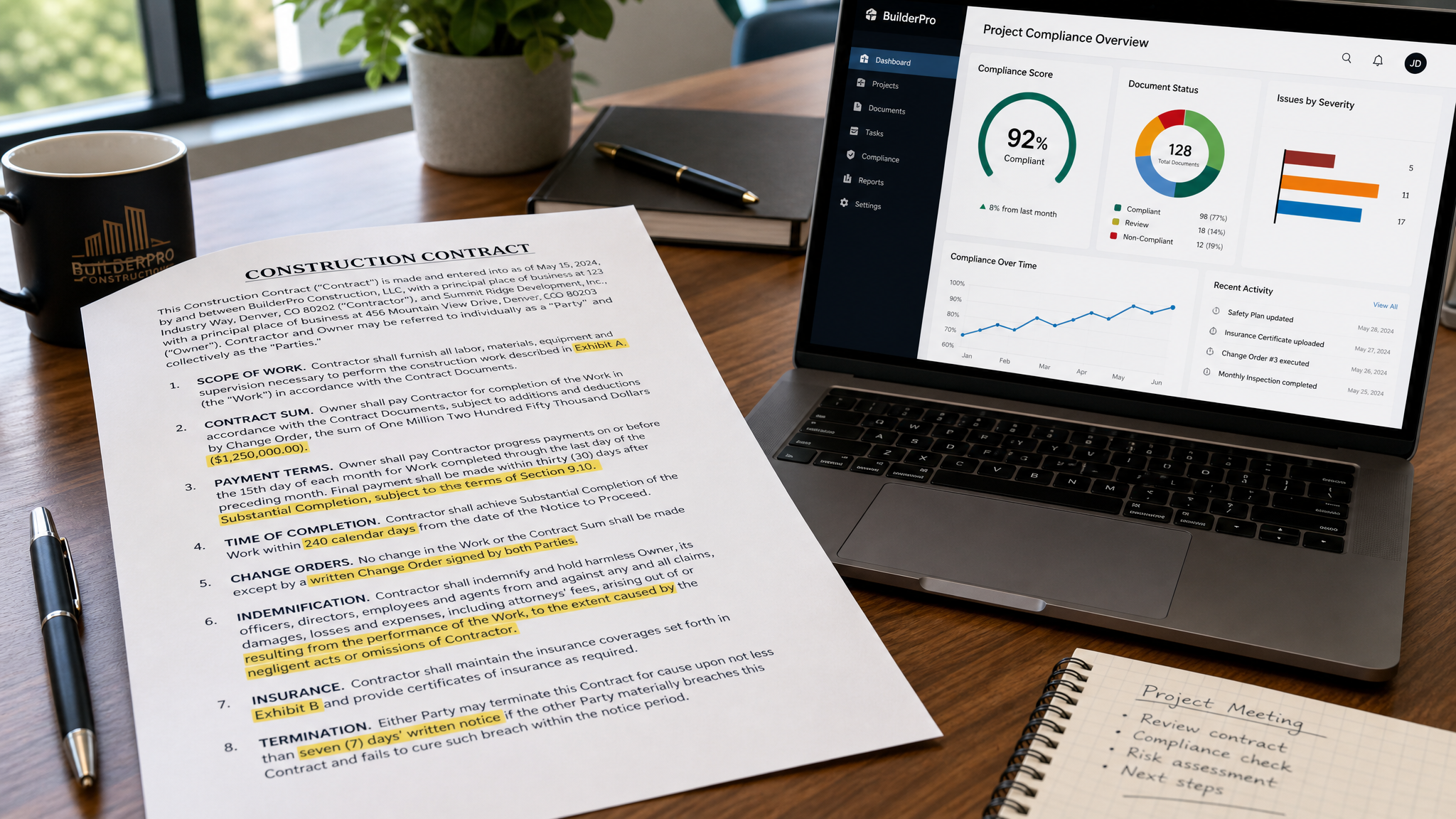
ContractGuard is built for exactly this. It uses AI to review construction contracts against New Zealand construction standards and the Construction Contracts Act 2002 — flagging unfair clauses, payment term risks, liability gaps, and variation exposure before you sign.
Crucially, ContractGuard does not just flag; it explains. Each issue comes with the reasoning behind it and an indication of severity, so your team can focus on what genuinely matters and negotiate from an informed position. And because every review produces a structured record, you build an audit trail of contract risk across your projects.
The Bottom Line
AI contract review in 2026 is not about replacing legal judgement — it is about making expert-level review available on every contract, fast enough that it actually happens. The tools worth adopting understand the New Zealand context, explain themselves, prioritise ruthlessly, and leave a record. Evaluate against those criteria, and you will find the ones that earn their place in your workflow.
---
ContractGuard uses AI to review construction contracts against the Construction Contracts Act 2002 and NZ construction standards — flagging risks, explaining why they matter, and building an audit trail you can rely on. [Try ContractGuard](https://contractguardnz.abacusai.app) to see AI contract review built for New Zealand construction.