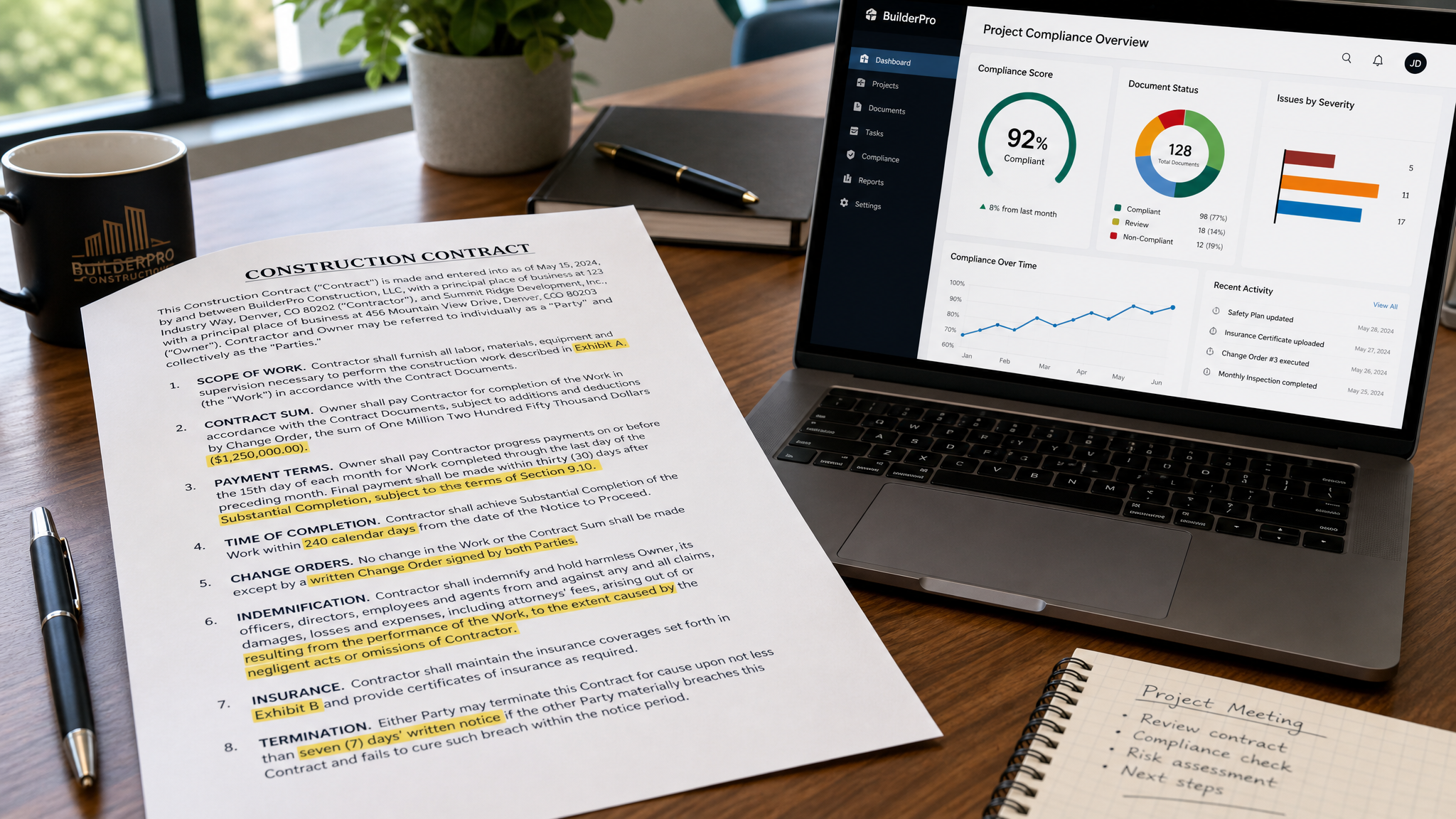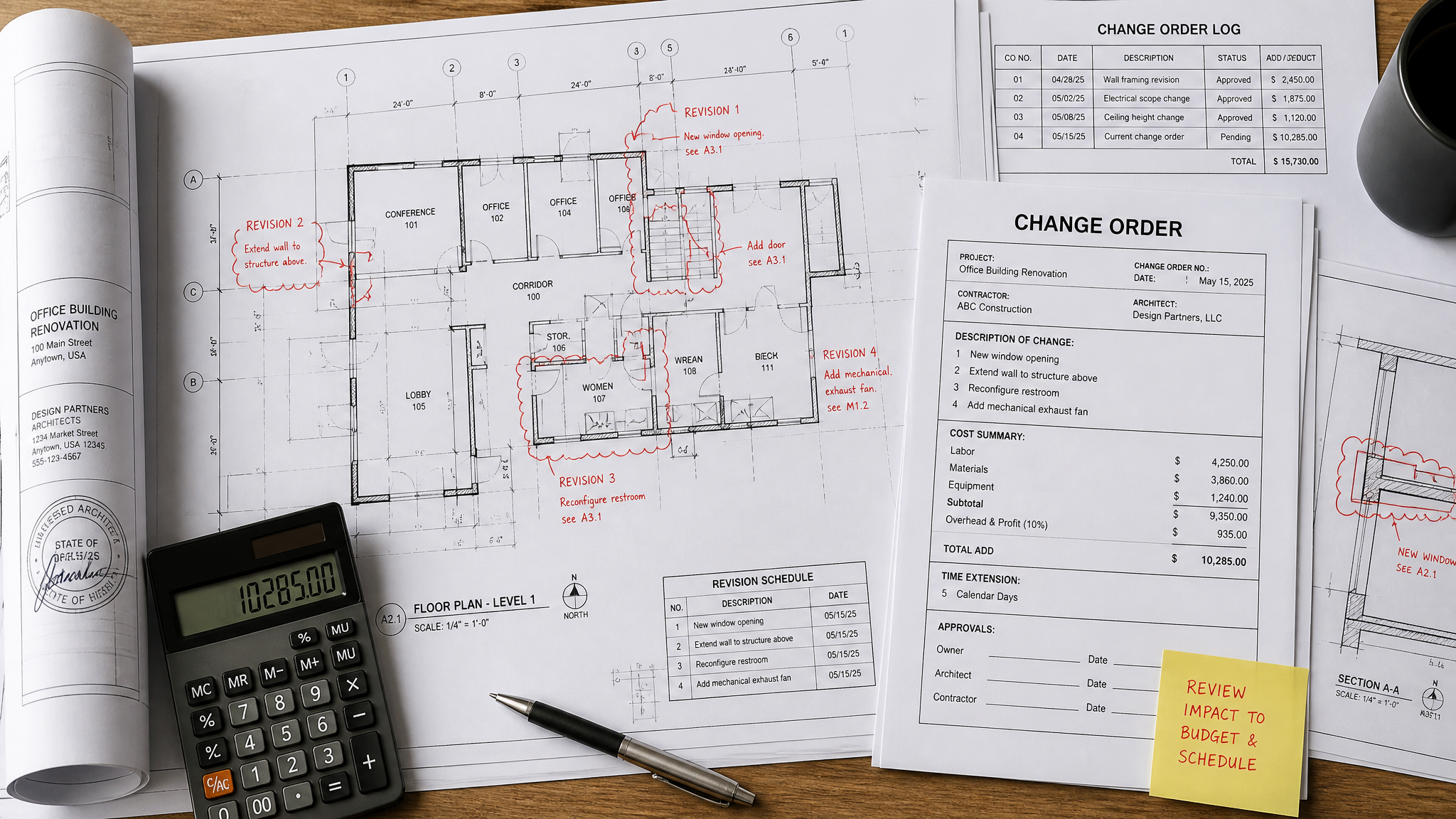


The Construction Contracts Act 2002 (CCA) was designed to address a persistent problem in New Zealand construction: subcontractors and suppliers not getting paid fairly or on time. More than two decades later, payment disputes remain the most common source of construction litigation — often because parties don't fully understand their obligations under the Act.
This guide breaks down the key payment compliance requirements and explains how construction teams can stay on the right side of the CCA.
Why Payment Compliance Matters
Payment compliance isn't just about avoiding legal disputes. It has direct implications for:
- Project continuity — subcontractors who aren't paid may slow down or stop work entirely
- Quality of work — payment disputes create adversarial relationships that undermine collaboration
- Reputation — a track record of payment issues makes it harder to attract quality subcontractors
- Legal exposure — CCA breaches can result in adjudication, suspension of work, and charging orders
- Cash flow — poor payment practices create cash flow problems that cascade through the supply chain
Key CCA Payment Obligations
Payment Claims
Under the CCA, a party who has performed construction work (or supplied goods) is entitled to submit a payment claim. Key requirements:
- A payment claim must be in writing
- It must identify the construction contract to which it relates
- It must indicate the work or goods to which the claim relates
- It must state the amount claimed and the due date for payment
- It must indicate that it is made under the CCA
A common mistake is failing to include the CCA reference. Without it, a payment claim may not trigger the statutory response obligations — though courts have sometimes accepted claims that substantially comply.
Payment Schedules (Responses)
When a party receives a payment claim, they must respond with a payment schedule within the timeframe specified in the contract (or within 20 working days if the contract is silent). The payment schedule must:
- State the amount the respondent proposes to pay (which may be less than the amount claimed)
- If the proposed amount differs from the claimed amount, indicate why it differs and the reasons for withholding payment
Critical point: If you don't respond to a payment claim with a payment schedule within the required timeframe, you become liable to pay the full claimed amount. This is one of the most consequential provisions of the CCA — and one that catches parties off guard regularly.
Default Payment Provisions
If a construction contract doesn't specify payment terms, the CCA's default provisions apply:
- Payment claims can be served monthly
- Payment is due 20 working days after a payment claim is served
- The payment schedule must be provided within 20 working days of the payment claim
These defaults are generous compared to many contractual payment terms, which is why most well-drafted construction contracts specify their own payment provisions.
Suspension of Work
If a party is owed money under the CCA and it remains unpaid, they have the right to suspend work after giving 5 working days' written notice. This is a powerful remedy that can bring a project to a halt — and it's available regardless of what the contract says about suspension.
Common Payment Compliance Failures
1. Missing Response Deadlines
The most common and costly CCA compliance failure is simply not responding to a payment claim within the required timeframe. When this happens, the full claimed amount becomes payable — even if there were legitimate reasons to dispute it.
This often happens because:
- Payment claims arrive and sit in someone's email inbox
- The responsible person is on site or on leave
- The team doesn't recognise the document as a CCA payment claim
- Internal approval processes take longer than the response deadline allows
2. Inadequate Reasons for Withholding
When a payment schedule proposes to pay less than the claimed amount, the CCA requires reasons for the difference. Generic responses like "work incomplete" or "quality issues" are often insufficient. The reasons need to be specific enough for the claimant to understand why payment is being withheld.
3. Pay-When-Paid Clauses
The CCA prohibits conditional payment provisions — commonly known as "pay-when-paid" clauses. Any contract provision that makes payment conditional on the payer receiving payment from a third party is void. Despite this, these clauses still appear in contracts, creating compliance risk for both parties.
4. Incorrect Payment Claim Procedures
Subcontractors sometimes undermine their own CCA rights by not following proper payment claim procedures. Claims that don't reference the CCA, don't identify the contract, or don't specify amounts correctly may not trigger the statutory obligations — leaving the claimant without the protections they expected.
How AI Contract Review Helps
Payment compliance starts with the contract itself. Before a single payment claim is issued, the contract sets the framework for how payments will work — deadlines, procedures, dispute resolution mechanisms, and (sometimes) non-compliant provisions.
ContractGuard's AI contract review is specifically trained to identify payment-related risks in construction contracts:
- Pay-when-paid detection — flagging conditional payment clauses that are void under the CCA
- Payment timeline analysis — identifying payment claim and response timeframes and highlighting where they differ from CCA defaults
- Withholding provisions — analysing clauses that allow payment to be withheld and assessing whether they're consistent with CCA requirements
- Suspension rights — checking whether contractual suspension provisions align with CCA statutory rights
- Retentions — reviewing retention provisions for compliance with the Construction Contracts Amendment Act 2015 requirements (including the obligation to hold retentions on trust)
By reviewing contracts before they're signed, teams can identify and negotiate payment provisions that create compliance risk — rather than discovering the problem when a dispute arises.
Tracking Payment Obligations in Practice
Beyond contract review, ongoing payment compliance requires systems for:
This last point is particularly important. Payment disputes often arise in the context of compliance issues — a subcontractor claims for work that the builder argues isn't compliant, or an inspection failure triggers a dispute about responsibility for remediation costs.
When payment tracking is connected to compliance tracking — as it is when teams use ContractGuard alongside ConsentNZ — these connections are visible and manageable rather than hidden in separate systems.
Protecting Your Position
Whether you're a head contractor or a subcontractor, practical steps to protect your payment compliance position:
For Head Contractors
- Set up systems to track payment claim deadlines — never miss a response deadline
- Review every subcontract for CCA compliance before signing — use tools like ContractGuard to flag risks
- Provide specific reasons when withholding payment — generic responses create legal risk
- Hold retentions on trust as required by the 2015 amendments
- Document everything — maintain clear records of work completed, inspections passed, and issues outstanding
For Subcontractors
- Follow proper payment claim procedures — reference the CCA, identify the contract, specify amounts clearly
- Track your response deadlines — if the head contractor doesn't respond in time, the full amount is payable
- Know your suspension rights — but use them strategically, with proper notice
- Review your subcontract — understand the payment terms you've agreed to and whether they're CCA-compliant
- Keep detailed records — evidence of work completed is essential if a dispute reaches adjudication
The Bigger Picture
Payment compliance isn't a standalone concern — it's deeply connected to project management, compliance tracking, and contractual risk management. Teams that treat these as separate domains inevitably create gaps where problems fester.
The most effective approach is an integrated one: contract review that identifies payment risks before they materialise, compliance tracking that connects inspection outcomes to contractual obligations, and payment management that operates within the same ecosystem.
---
Kompliy's tools work together to close the gap between contract obligations and compliance outcomes. ContractGuard reviews contracts for CCA payment risks before signing. ConsentNZ tracks post-consent compliance from BC issuance to CCC. Approvios manages approval workflows that connect to payment milestones. [See how ContractGuard identifies payment risks in your contracts.](https://contractguardnz.abacusai.app)